
What actually happens when you sell to us
No jargon, no fine print hiding in step five. This is the whole path from the first phone call to the day the money lands, including the parts people usually worry about: the mortgage payoff, the stuff in the attic, and the lawyers.
1. The first conversation
It starts with a call, a text, or the short form on our contact page. Expect us to ask about the basics: the address, roughly how old the roof and mechanicals are, whether anyone is living there, and what you still owe. We also ask what you are hoping for. Some people need to be out in two weeks; others want to close after the school year ends. Knowing that up front lets us shape the offer around your life rather than ours.
If the property clearly isn’t something we buy, we say so on that call instead of stringing you along.
2. A walk-through, not an inspection
When the house looks like a fit, one of us comes out to see it, usually Greg or Brett. Plan on a relaxed visit. We are checking the foundation, roof, plumbing, electrical and heating, and getting a sense of what the renovation would take. You do not need to clean, empty closets or hide the cracked tile. If the house is vacant or tenant-occupied, we can coordinate access with whoever has the keys.
3. A written offer you can take your time with
After the visit we put a price in writing, normally within a day. We base it on the location, the condition, the repairs we expect to pay for, and what comparable homes nearby have recently sold for. We will explain each of those pieces if you ask, and we encourage you to ask.
The offer also says who covers which closing costs and what date we are proposing. There is no obligation attached. Talk it over with family, show it to an attorney, collect another quote. If it isn’t right, you simply say no.
4. Contract and title work
Once you accept, the contract is signed and a title company searches the property’s records for anything that has to be cleared: your mortgage, a home equity line, unpaid taxes, judgments, or an old contractor’s lien. These get paid off from the sale proceeds at closing, so you don’t need cash on hand to settle them first. If something unexpected shows up, we call you and work out a plan together.
New York sellers: it is customary here for each side to have its own real estate attorney, and the seller’s attorney usually prepares the contract. If you don’t have one yet, any local real estate attorney can represent you; the choice is entirely yours. New York also requires most sellers of residential property to give the buyer a Property Condition Disclosure Statement; since March 20, 2024 the old option of handing over a $500 credit instead is gone. Be candid on that form. We are buying the house expecting problems, and honest answers help us give you a number we can stand behind.
New Jersey sellers: when a residential sales contract is prepared by a licensed real estate agent, New Jersey builds in a three-business-day attorney review period during which either side’s lawyer can cancel or propose changes. A direct sale to us doesn’t use an agent’s form contract, but you are always welcome to have a New Jersey attorney review our agreement before you sign.
5. Closing day
The closing happens with the attorneys and the title company. Liens and the mortgage are paid off, the deed transfers to us, and the remaining proceeds go to you, typically by wire. When the title is clean, we can close in as little as about seven days. When you need more time, we pick a later date together.
6. Moving out and what you leave behind
Take what matters to you and leave the rest: furniture, old paint cans, the boxes in the garage. Clearing the house becomes part of our renovation. If you need a little time after signing to finish moving, tell us early so it can be written into the agreement.
After the keys change hands
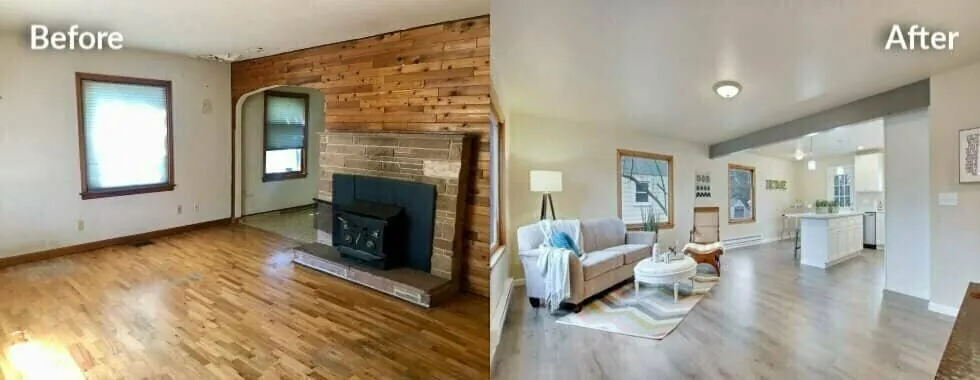
The work you would have had to do before listing becomes our job after we buy: ripping out dated paneling, opening up rooms, refinishing floors, replacing what’s worn out. That is why we can buy a house in rough shape without asking you to lift a finger, and also why our price reflects the cost of that work.
Once the project is done, the house goes to a new owner or becomes a rental. Neighbors tend to like that part.
What it costs you
No commission, because nobody is being paid to list the house. No repair bills, no staging, no cleaning crew. What remains are the items any seller owes, such as your own attorney’s fee and, in New York, the state real estate transfer tax that sellers customarily pay. New Jersey sellers usually pay the state realty transfer fee. Your written offer will spell out who pays which closing costs, so there are no guesses.
Still have questions? Our FAQ covers the ones we hear most, or just call (845) 367-4898.